ServicesResidential Roofing
Residential Roofing in Wylie
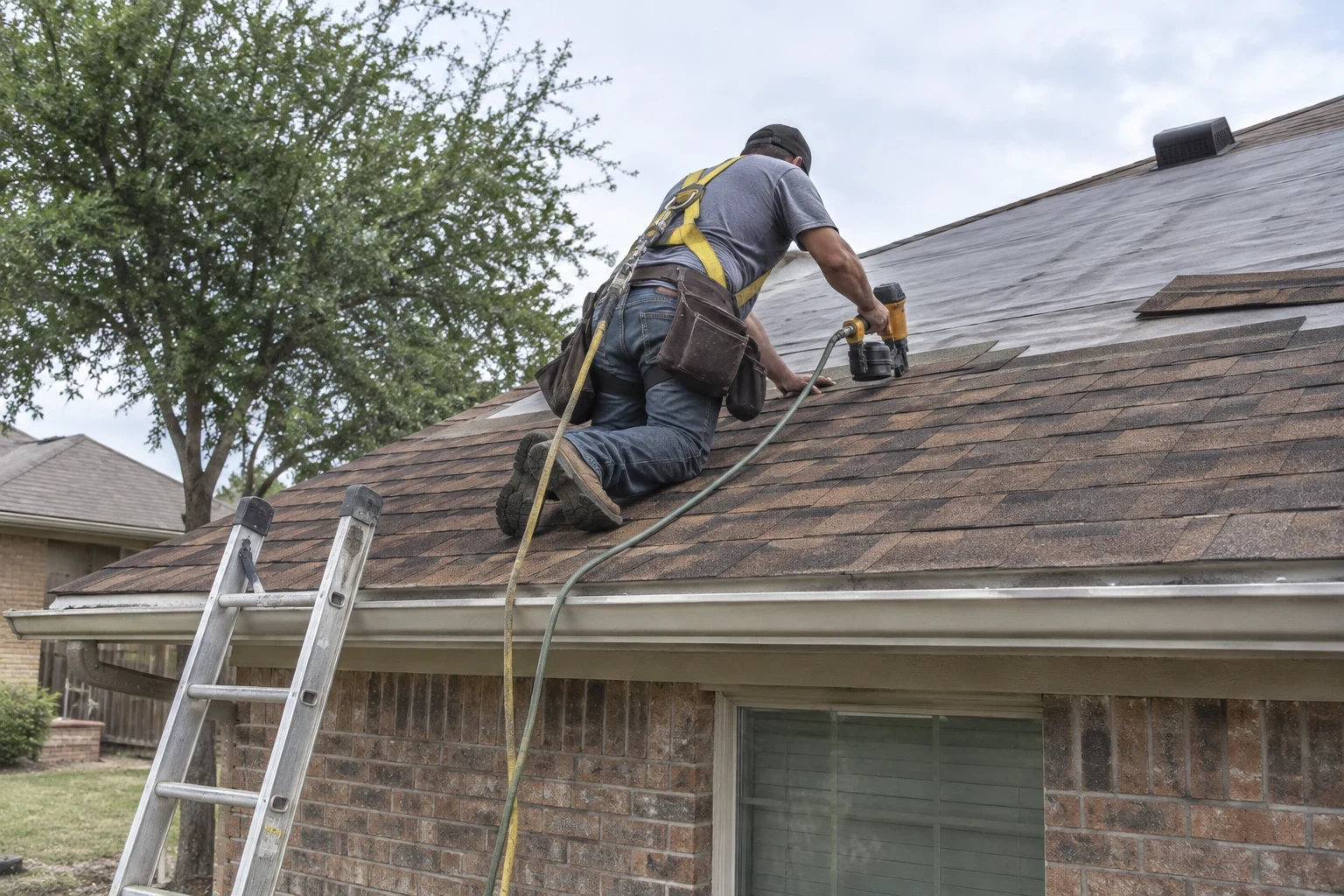
We roof houses the way we would want our own street done: materials chosen for your home, careful flashing and ventilation, and a yard left as neat as we found it. Everything begins with an unhurried conversation and a free estimate.
A roof put together layer by layer
The shingles are only the top layer of what keeps your home dry. Below them are the decking, the underlayment, the drip edge, flashing wherever the roof meets a wall or chimney, and the vents that let hot attic air escape. Skip or hurry any one of those, and a roof can look sound for a few seasons before water starts finding its way inside.
We treat residential roofing as one complete system. Before anything is ordered, we go over the materials with you, explain the job each part does and hand you a written estimate. Attics get very hot through the summer months, so we take ventilation seriously; good airflow helps shingles last longer and keeps upstairs rooms cooler.
Our crews work in Wylie and neighboring towns including Sachse, Murphy and Rowlett. For business properties, see our commercial roofing page.
What our residential roofing work includes
- 01
Material selection
We lay out the options that suit your home, from architectural asphalt shingles to impact-rated shingles and standing seam metal. We explain how each one handles heat, wind and hail, and how it will look on your house.
- 02
Decking check
Once the old layers are off, we look at the plywood decking. Soft or rotted boards are shown to you before anything new goes over them.
- 03
Underlayment and ice-and-water barrier
Synthetic underlayment goes across the deck, with a self-adhering barrier in valleys and around penetrations where water collects.
- 04
Flashing and drip edge
New metal flashing at walls, chimneys and pipe boots, plus drip edge along the eaves. These details stop most of the leaks we see on poorly installed roofs.
- 05
Attic ventilation
We balance intake and exhaust with ridge vents or other options suited to your roofline, so trapped heat does not cook the shingles from below.
- 06
Cleanup
Tarps protect landscaping, and we run a magnetic sweeper across the lawn and driveway for stray nails at the end of each day.
Questions about Residential Roofing?
Call(972) 597-9476Signs your home may need a new roofing system
Granules in the downspouts
Asphalt shingles shed their protective granules as they age. Heavy buildup at the bottom of a downspout, or bare dark patches on the roof, means the shingles are wearing thin.
Curling or lifting shingles
Edges that cup upward or tabs that lift in the wind are no longer sealed. Water and wind can get underneath them.
Stains on ceilings
Brown rings on an upstairs ceiling or inside a closet often trace back to failed flashing or underlayment above.
A sagging roofline
A dip between rafters can point to moisture-damaged decking. It is worth a closer look before winter rain arrives.
Daylight in the attic
If you can see light through the boards, water can find the same path.
How a roofing project runs
- 1
Estimate visit
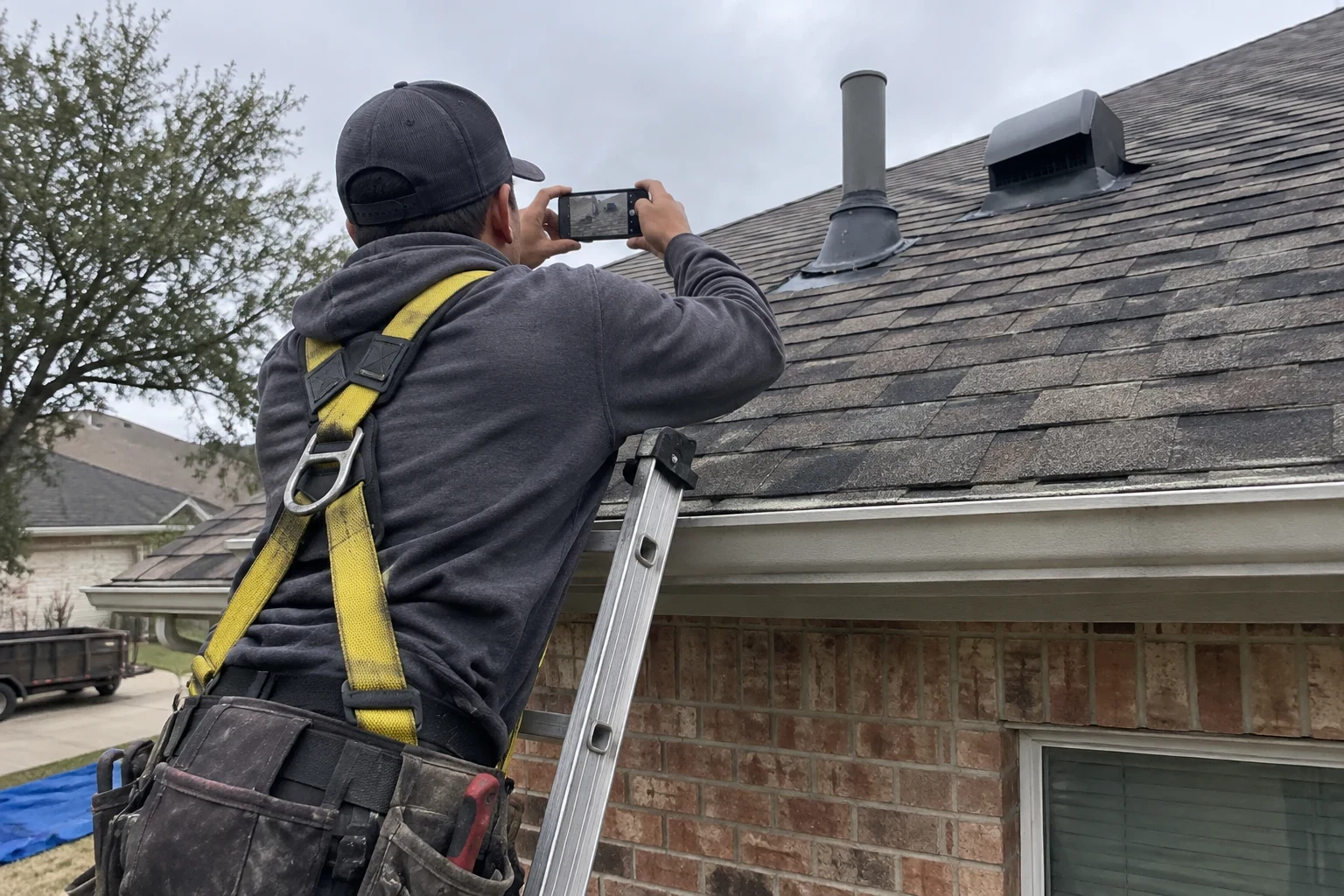
We come by, look over the roof and the attic, take photos and hear what you want from the project. A written, line-item estimate follows, and there is no pressure to decide on the spot.
- 2
Choosing materials
Together we settle on a shingle or metal profile and a color, and confirm the flashing and ventilation details. Where the city requires a permit, we pull it.
- 3
Installation day
Once the crew arrives, tarps go down over plantings and against the siding. We work section by section, so no part of the house sits exposed. Most homes wrap up in one to three days, depending on size and weather.
- 4
Walkthrough and cleanup
A magnetic sweeper goes over the lawn and drive, and every bit of debris leaves with us. Then we tour the new roof with you, showing the fresh flashing and vents so you know exactly what went in.
What sets the price of your roof
Every house prices differently, so we give a number only after we have walked yours. Your written estimate lists each part of the job separately. If tearing off the old shingles uncovers something like soft decking, you see photos first and that work waits for your approval.
- Roof size and slope
- More square footage means more shingles, more underlayment and more hours on site. A steep slope calls for harnesses and roof jacks, and staying tied off makes the crew's pace slower.
- Your choice of material
- Standard architectural shingles cost less up front than impact-rated shingles or metal. The tougher options make back some of that difference by handling hail better.
- State of the decking
- Each sheet of plywood we have to replace adds both material and labor to the price.
- Complexity of the roofline
- Chimneys, skylights, dormers and valleys each need flashing shaped by hand, and every one adds time to the job.
- Extra layers to tear off
- On some older houses, a second layer of shingles sits on top of the first. Taking both down to bare wood means more labor and more weight to carry away.
Residential roofing questions
How many days will the work take?
Most single-family homes keep the crew on the roof for one to three days. Extra size, a steep pitch or decking repairs can add time. We give you a schedule before work starts and keep you posted if weather pushes it back.
Do I need to be home during the job?
There is no need to stay put all day. It helps to meet the crew on the first morning and to join us for the final walkthrough. Expect some noise inside, and parking on the street leaves the driveway open for our trucks and debris.
Which shingles hold up best against hail?
Class 4 impact-rated shingles are built to resist hail better than standard ones. Some insurers offer lower premiums for them, so it is worth a quick question to your agent. We bring samples to the estimate visit so you can compare them in hand.
Is metal roofing a good fit for a house?
In many cases, yes. Standing seam metal reflects summer heat and lasts a long time, though it costs more at the start. We will tell you plainly whether it suits your roofline and your budget.
What happens if you find rotten decking?
Work on that section stops, and we photograph the damaged boards so you can see them for yourself. Nothing gets replaced until you agree. Your estimate already lists a per-sheet price for decking, so the final invoice matches what you signed off on.
Let's look at your roof together
Give us a sense of your house and anything you have noticed up top. We will arrange a visit, take a careful look and follow up with a clear estimate in writing.