ServicesCommercial Roofing
Commercial Roofing in Wylie
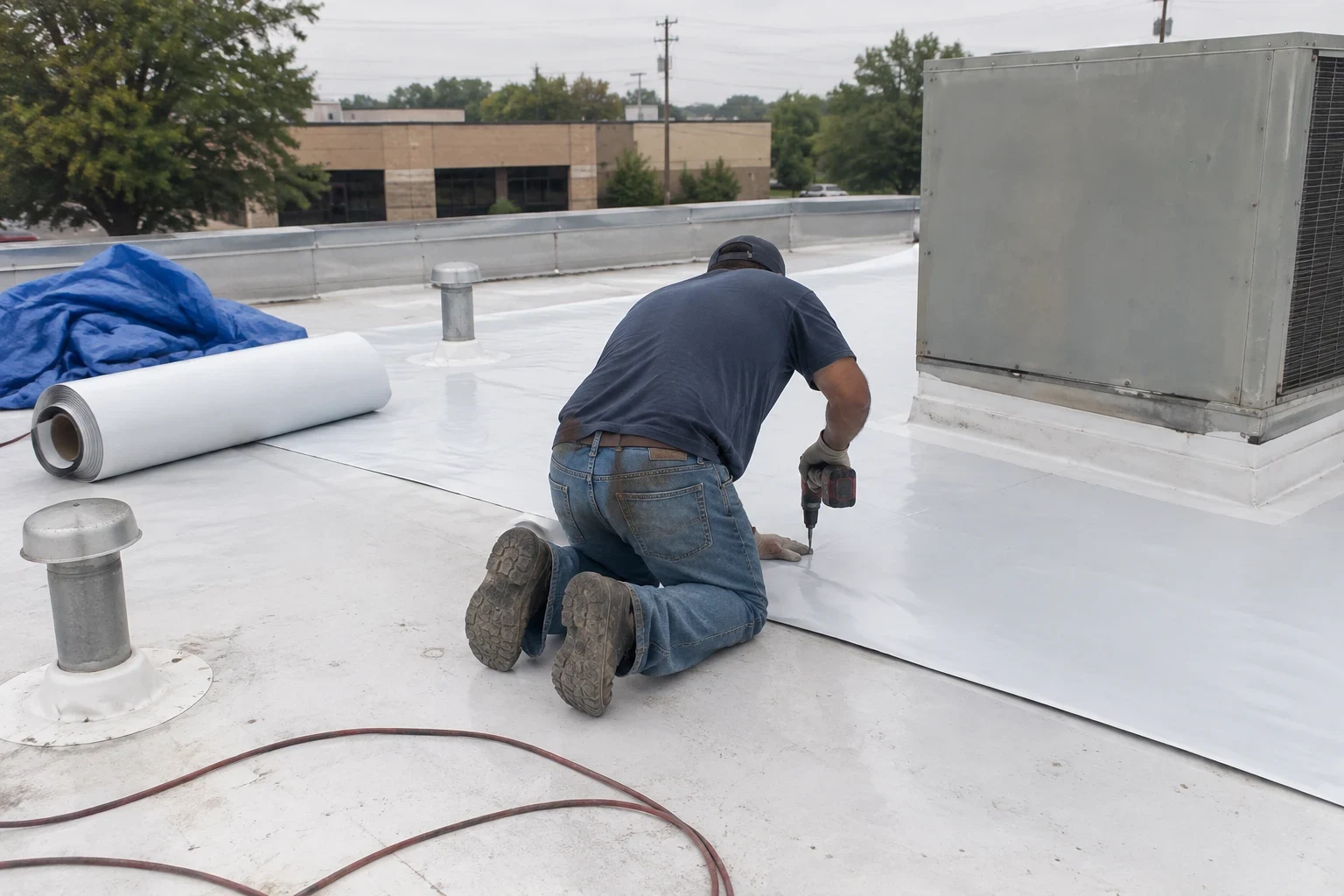
We install commercial roof systems for offices, retail spaces, shops and small warehouses. You get a membrane or metal roof chosen for your building, detailed carefully at every edge and drain, and a work schedule that keeps your doors open while we're overhead.
A roof system planned around your building and your business
Most commercial roofs are flat or low-slope, and they behave very differently from a pitched roof. Water moves slowly, so the membrane, the seams and the drainage have to be right. Small details at a parapet wall or a rooftop unit decide whether the roof lasts or leaks.
We start by walking the roof and the space beneath it with you. We look at the deck, the insulation, how water leaves the surface and what equipment sits up top. Then we recommend a system that fits the building, explain why, and put the scope in a written estimate you can share with partners or a property owner.
We work the way we'd want a neighbor to work on our own building: tidy staging, a clear schedule, and straight answers when we find something you didn't expect.
What our commercial roofing work includes
- 01
TPO and PVC single-ply membranes
White single-ply membranes reflect a good share of summer sun, which helps with cooling loads. Seams are heat-welded rather than glued, so they fuse into one continuous sheet.
- 02
Modified bitumen systems
Multi-layer modified bitumen holds up well to foot traffic around rooftop equipment. It's a sound choice where technicians are on the roof often.
- 03
Standing seam and metal roofs
For buildings with enough slope, metal panels offer long service life and a clean, finished look from the street. We pay close attention to fasteners, clips and panel ends, where metal roofs tend to fail first.
- 04
Flashing, curbs and edge metal
Rooftop units, vents, skylights and parapet walls each get their own flashing detail. New edge metal and coping caps tie the system together and keep wind from getting under the membrane.
- 05
Drains, scuppers and tapered insulation
Ponding water shortens a membrane's life. Where water sits, we can add tapered insulation to build slope toward drains and scuppers so the roof sheds water within a day or so of rain.
Questions about Commercial Roofing?
Call(972) 597-9476Signs your building is ready for a new roof system
Water that sits for days
Standing water two days after rain means the roof has lost its slope or the drains are undersized. Over time it breaks down the membrane and adds weight to the deck.
Stained ceiling tiles
Brown rings on ceiling tiles often trace back to a seam or flashing that opened up well away from the spot you see. Water travels along the deck before it drips.
Blisters, cracks and open seams
Bubbles in the membrane, alligator cracking on older surfaces, or seams peeling back at the edges all point to a roof near the end of its working life.
Soft spots underfoot
A spongy feel when you walk the roof usually means wet insulation beneath the membrane. Wet insulation loses its value and can hide deck corrosion.
Rising cooling costs
A dark, aging roof surface in a long Texas summer can push your energy bills up. A reflective membrane over fresh insulation often makes a noticeable difference.
How a commercial roofing project runs
- 1
Walk-through and estimate
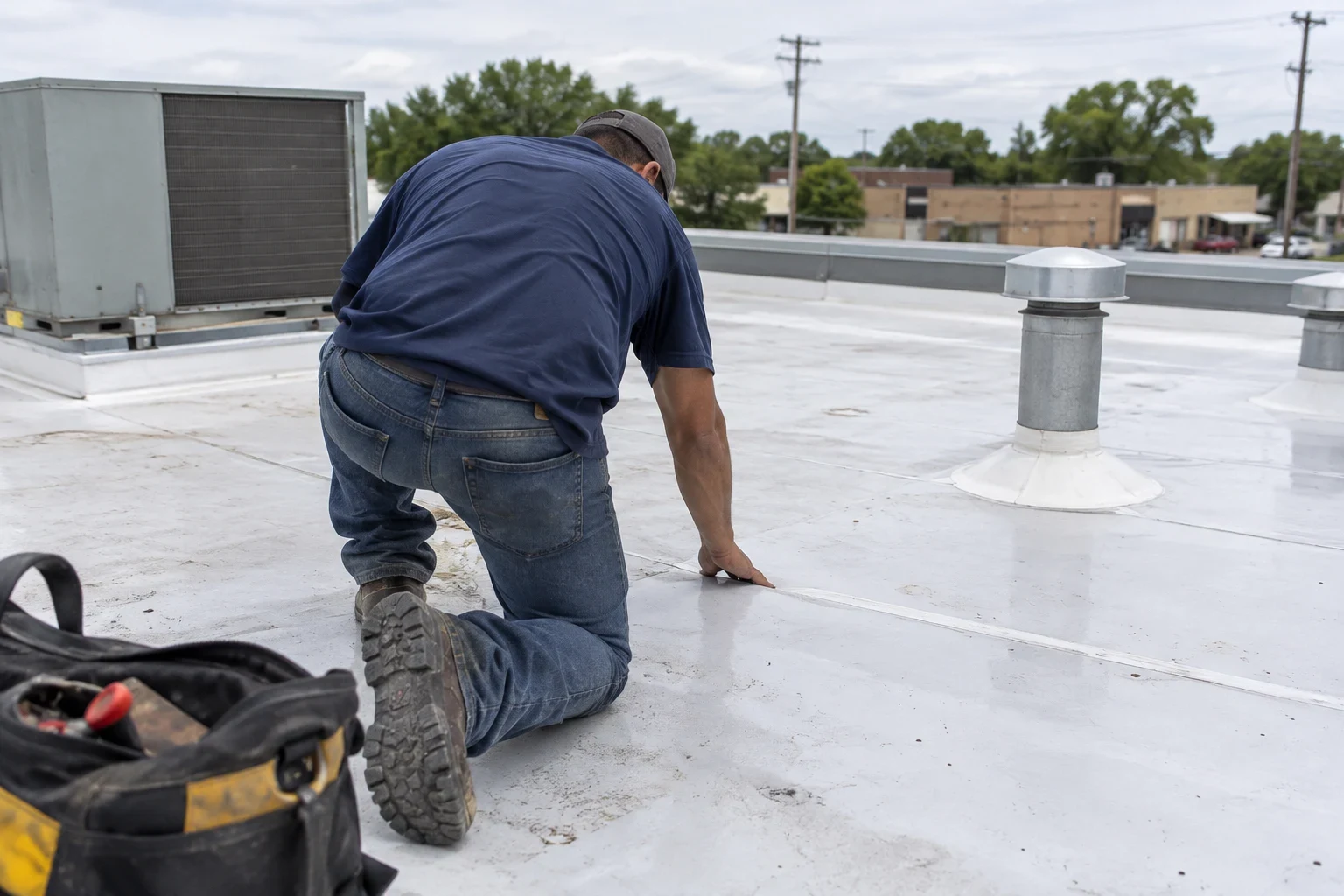
We walk the roof surface, check the underside of the deck where the ceiling allows, and note every piece of rooftop equipment. Your written estimate spells out the system, the insulation, the flashing work and the permit.
- 2
Scheduling around your hours
We plan the work around your open hours, delivery times and where your customers park. If mornings are quiet, we start early. Each day you know which sections we will open.
- 3
Tear-off and deck check
Old layers come off one section at a time, and each section is sealed up before we leave for the day. If the decking is damaged, we show you photos and talk it over before any added work begins.
- 4
Installation and detailing
Insulation goes down first, then the membrane or panels, and then every curb, wall and edge gets flashed. We check seams by hand as we go.
- 5
Cleanup and final look
We sweep the lot and grounds for stray fasteners and debris, then haul away the old roofing. Before we call the job finished, we go up with you to look over the seams, flashing and edge metal in person.
What moves the cost of a commercial roof
No two buildings price the same, so we base the number on what we find up top instead of a rough square-foot rate. Your written estimate is broken into line items, and each one shows a separate part of the work. The factors below carry the most weight.
- Roof size and shape
- Square footage sets the starting point. Extra corners, level changes and parapet walls add labor, since each one needs its own flashing detail.
- System and insulation
- Single-ply, modified bitumen and metal each come with different material and labor costs. Insulation thickness matters too, along with whether it is tapered to carry water toward the drains.
- What's under the old roof
- Several old layers, soaked insulation or a corroded deck all add tear-off and repair time. We can only confirm these once the roof is open, so we photograph anything we find and review it with you.
- Rooftop equipment and access
- HVAC units, vents and skylights each need curbs and flashing. A tall building, tight access or little room to stage materials can change the equipment we bring and how long the work takes.
Commercial roofing questions
Will we have to close while the roof is being done?
Usually not. We open and close the roof one section at a time and try to schedule the loudest tear-off away from your busiest hours. Before the first day, we settle parking, entrances and the material staging area with you so staff and customers can come and go safely.
Which roof system is right for my building?
That depends on the slope, how often people walk the roof, what equipment sits on it and how long you expect to keep the building. We lay out the tradeoffs between single-ply, modified bitumen and metal in plain terms and give you our recommendation. The final choice stays with you.
Do you take care of the permit?
We do. We pull the permit for the roofing work and line up any inspections the city requires. You will see the permit as its own line on the estimate.
How long does a commercial roof take?
A smaller retail or office roof can take a few working days, and larger or more detailed roofs take longer. Weather and conditions under the old roof can move the schedule, and we keep you posted at the end of each day.
What areas do you work in?
We roof commercial buildings in Wylie and nearby communities such as Sachse, Murphy, Rowlett, Garland and Plano. The Service Areas page lists more of the towns we cover.
Talk through your building's roof
Tell us about the building, the age of the roof and what you're seeing inside. We'll set a time to walk it with you and give you a clear written estimate.